
Mastering Whitewater Kayaking: Intermediate & Advanced Skills for Confident River Running

Whitewater kayaking is an exhilarating sport that combines skill, strategy, and a deep understanding of river dynamics. As paddlers progress from beginner to intermediate and advanced levels, mastering specific techniques becomes essential for navigating challenging waters safely and effectively. This article will explore the essential skills required for intermediate and advanced whitewater kayaking, focusing on techniques, safety protocols, and strategies for tackling Class III rapids. By honing these skills, paddlers can enhance their confidence and performance on the river.
In this guide, we will cover the essential intermediate techniques, advanced skills that improve river navigation, effective strategies for running Class III rapids, pathways for skill progression, and the gear that supports these activities. Whether you are looking to refine your kayak roll or learn about advanced eddy turns, this article will provide valuable insights to elevate your kayaking experience.
What Are the Essential Intermediate Whitewater Kayaking Techniques?
Intermediate whitewater kayaking requires a solid foundation of skills that enhance both safety and performance. Key techniques include mastering the kayak roll and developing core paddle strokes that facilitate effective maneuvering in moving water. These skills not only improve a paddler's ability to navigate rapids but also build confidence in handling unexpected situations on the river.
How to Perform and Refine the Intermediate Kayak Roll Safely

The kayak roll is a critical skill for any intermediate paddler, allowing them to recover from capsizing without exiting the kayak.
To perform the roll safely, follow these steps:
- Set Up: Begin in a comfortable position with your paddle extended in front of you.
- Initiate the Roll: Lean forward and engage your core while using your hips to initiate the roll.
- Use Your Paddle: As you roll, sweep your paddle across the surface of the water to assist in the recovery.
- Finish Strong: Complete the roll by bringing your body upright and maintaining control of your kayak.
Practicing this technique in calm water before attempting it in rapids is essential for safety. Common mistakes include not engaging the hips or over-relying on the paddle, which can lead to ineffective rolls.
Which Core Paddle Strokes and Maneuvers Build Intermediate Skills?
Intermediate paddlers should focus on several core paddle strokes and maneuvers to enhance their skills:
- Forward Stroke: Essential for propulsion, this stroke should be powerful and efficient.
- Sweep Stroke: Used for turning, the sweep stroke involves a wide arc with the paddle to pivot the kayak.
- Draw Stroke: This stroke helps in moving the kayak sideways, crucial for navigating obstacles.
Mastering these strokes allows paddlers to maneuver effectively in various river conditions, improving their overall performance and safety.
How Do Advanced Whitewater Kayaking Techniques Enhance River Navigation?
As paddlers advance, they encounter more complex river features that require refined techniques. Advanced skills such as boofing and executing precise eddy turns are vital for navigating challenging rapids. These techniques not only enhance navigation but also contribute to a paddler's ability to handle difficult situations with confidence.
What Is the Kayak Boofing Technique and How Is It Executed?
Boofing is a technique used to launch the kayak off a drop or ledge, allowing the paddler to land smoothly on the downstream side.
To execute the boof:
- Approach the Drop: Paddle towards the drop with speed and confidence.
- Lift the Bow: As you reach the edge, lean back and pull up on the bow to lift it.
- Launch: Propel yourself off the drop, aiming to land flat on the water.
This technique is particularly useful for avoiding obstacles and maintaining momentum in fast-moving water. Practicing boofing in controlled environments can help paddlers gain the necessary skills for more challenging drops.
How to Master Advanced Eddy Turns and Peel Outs for Complex Rapids
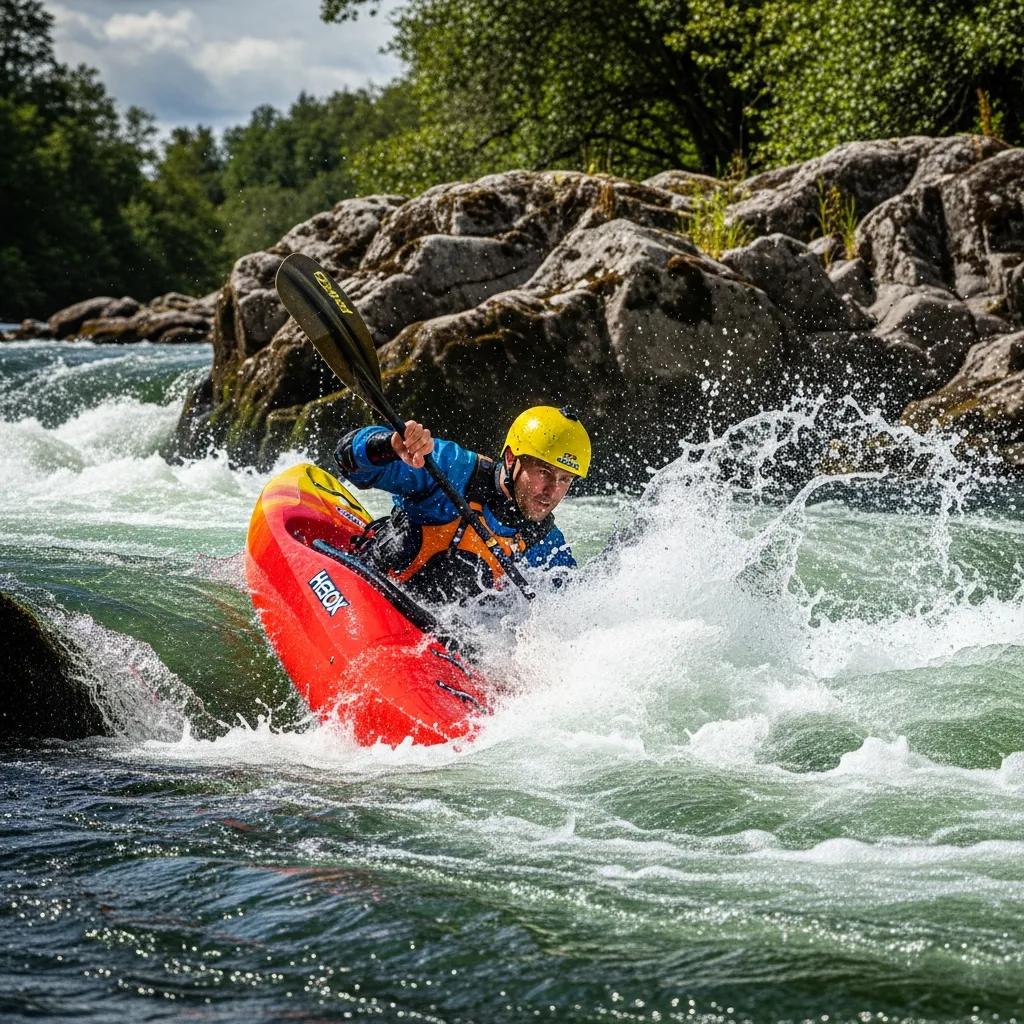
Eddy turns and peel outs are essential for navigating complex rapids. To master these techniques:
- Eddy Turn: Approach the eddy at an angle, using a strong sweep stroke to pivot the kayak into the eddy.
- Peel Out: To exit the eddy, angle the kayak downstream and use a forward stroke to gain momentum.
These maneuvers allow paddlers to effectively navigate obstacles and maintain control in turbulent waters, enhancing their overall river navigation skills.
What Are Effective Strategies for Running Class 3 Whitewater Rapids?
Running Class III rapids requires a combination of skill, strategy, and awareness. Paddlers must be able to read river features, identify hazards, and implement safety protocols to ensure a successful run.
How to Read River Features and Identify Hazards in Class III Rapids
To read river features and identify hazards in Class III rapids, paddlers should:
- Scout the River: Familiarize yourself with the rapids and potential hazards before launching. This helps in understanding the layout and identifying obstacles like logs and boulders.
- Observe Water Flow: Look for changes in water flow, which can indicate the presence of rocks, eddies, or other hazards.
- Check for Eddies: Identify suitable take-out points and eddies, as they can be sparse and difficult to catch in some areas.
- Plan for Portage: Be aware of portage options around significant obstacles, such as falls.
- Stay Informed: Monitor weather patterns and water levels, as these can significantly impact river conditions and safety.
- Wear Safety Gear: Always use appropriate safety equipment, including helmets and personal flotation devices.
These practices will enhance safety and enjoyment while navigating Class III rapids.
Which Safety Protocols and Rescue Techniques Are Crucial for Intermediate Runs?
The crucial safety protocols and rescue techniques for intermediate runs include:
- Wearing Appropriate Safety Gear: Always wear helmets and personal flotation devices (PFDs).
- Scouting the River: Familiarize yourself with the rapids and potential hazards before launching.
- Planning Routes and Portage: Identify suitable take-out points and be aware of portage options, especially around obstacles like Rubicon Falls.
- Monitoring Weather and Water Levels: Stay informed about current weather patterns and seasonal variations that affect river conditions.
- Knowledge of Hazards: Be aware of potential hazards such as logs and boulders in the river.
These protocols help ensure a safe and enjoyable kayaking experience on intermediate runs.
While adhering to safety protocols is paramount for an enjoyable experience, understanding the potential risks and common injuries in whitewater paddlesports further emphasizes the importance of preparedness.
Whitewater Paddlesport Safety: Injury Prevention & Risk Management
Whilst injuries and illnesses in white-water paddlesports are relatively rare, a range of acute and chronic injuries as well as environmental illnesses can occur. Studies report that lacerations, contusions, fractures and dislocations are common acute injuries. In canoeists and kayakers, injuries to the shoulder joint are frequently reported. As paddlesports are popular in remote locations, where there is limited access to medical assistance, accurate assessment of risk by experienced paddlers using appropriate equipment and trained in first-aid training is recommended to mitigate the risk of incidents occurring.
White-Water Paddlesport Medicine: Canoeing,
Kayaking and Rafting, I Wilson, 2016
How Can Paddlers Progress from Intermediate to Advanced Whitewater Skills?
To progress from intermediate to advanced whitewater skills, paddlers can participate in specialized whitewater clinics that focus on refining techniques and tackling more challenging waters. Engaging in guided river trips can also provide valuable experience in navigating various conditions while learning from experienced guides. Additionally, continuous practice and exposure to different river environments will help enhance skills and confidence.
What Are Recommended Drills and Practice Methods for Skill Advancement?
The recommended drills and practice methods for skill advancement in kayaking include:
- Basic Kayaking Courses: Designed for newcomers to learn essential paddling techniques and safety protocols.
- Intermediate Sessions: Focus on refining existing skills for those with some experience.
- Specialized Whitewater Clinics: For paddlers looking to tackle more challenging waters.
- Guided River Trips: Provide opportunities to practice skills in a real-world environment while learning about river safety and navigation.
- Rescue Training: Important for safety and skill enhancement.
- Club Coaching and Training: Offers ongoing skill development and practice opportunities.
These methods cater to various skill levels and emphasize hands-on learning experiences.
How Does Instructor Training Support Mastery of Advanced Kayaking Techniques?
Instructor training supports mastery of advanced kayaking techniques by providing structured learning experiences designed by experienced instructors. These instructors are passionate about sharing their knowledge and ensuring a safe learning environment, which is crucial for developing advanced skills. The training includes specialized clinics that focus on refining techniques and navigating challenging waters, allowing participants to gain confidence and proficiency in their kayaking abilities.
What Gear and Equipment Best Support Intermediate and Advanced Whitewater Kayaking?
Choosing the right gear and equipment is essential for both safety and performance in whitewater kayaking. Intermediate and advanced paddlers should consider specific kayaks, paddles, and safety gear that enhance their experience on the water.
How to Choose Kayaks and Paddles Suited for Advanced River Running
When selecting kayaks and paddles for advanced river running, consider the following features:
- Kayak Type: Look for a kayak designed for whitewater, with a shorter length for maneuverability and a rounded or planing hull for better performance in rapids.
- Paddle Material: Choose lightweight materials like carbon fiber or fiberglass for ease of use and durability.
- Blade Shape: Opt for wider blades that provide more power during strokes, essential for navigating challenging waters.
Selecting the right equipment can significantly impact performance and safety on the river.
Which Safety Gear Enhances Protection During Challenging Whitewater Trips?
Essential safety gear for whitewater kayaking includes:
- Personal Flotation Device (PFD): A well-fitted PFD is crucial for buoyancy and safety.
- Helmet: Protects the head from impacts with rocks and other hazards.
- Spray Skirt: Keeps water out of the kayak, essential for maintaining control in rough conditions.
- Rescue Gear: Includes throw bags and whistles for emergency situations.
Investing in high-quality safety gear is vital for ensuring a safe and enjoyable kayaking experience.